Category Archives: Educational

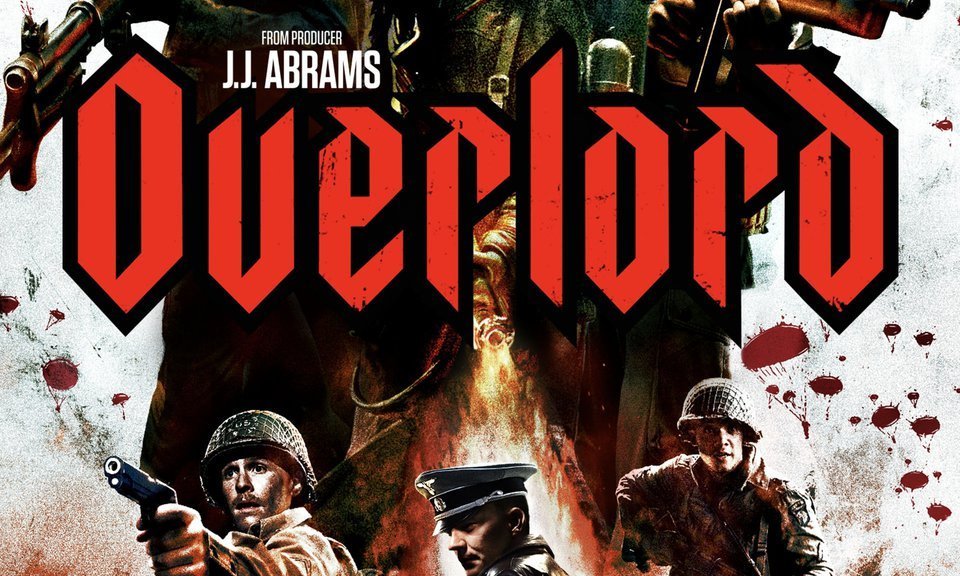
Fashionably Late Movie Reviews: Overlord.

INTRODUCTION: Overlord, was a movie I wanted to see back in 2018, but opted to wait. I’m not sad that I waited, but at the same time, this would have been wicked to have seen. It’s one of the better WW2 flicks in a good long while and I think you’ll enjoy this one. It isn’t as good as Dead Snow and it isn’t about zombies, like the trailer made it out to be, but it is still the best WW2 movie I have seen since Saving Private Ryan.

SYNOPSIS: The day before D-Day and a group of soldiers are sent into Normandy with the task of disrupting a transmissions tower in order for ground troops to successfully make it to the beach.

CHARACTERS: Not bad! You don’t really feel bad for them, but each one is likable enough that they’re not overtly shallow. The “villain” is definitely weak as fuck. He is a want be Hans Lambda from Inglorious Bastards, but with none of the charm or anything remotely likable, making him just a cliché. Each one is unique enough that they’re memorable and you can tell them apart, but you aren’t going to see any iconic characters come out of this movie.

ACTING: All the actors did very well. None of them are going to win an award for this, but it was very good.

STYLE: Fantastic! I loved the visuals and the FX would pretty damn good!

MUSIC: Nothing iconic, but works with the flick.

HISTORICAL ACCURACY: Mostly true to the time period and very well done.

TENSION: Is there and you can feel it in spades. It’s a slow burn, but not that slow of a burn. Really well balanced.

SUBTEXT: None, except for the overt, don’t play God, but, whatever.

CONCLUSION: This is one fine movie. I don’t think it is one I would watch over and over again, but it was fun at least once. I could see myself watching it at least one more time, though. The acting is one point, the visuals are good, the tension is there, the characters aren’t bad and the acting is very good. It has a few errors and I wasn’t too fond of the censoring of the Nazi logo in exchange for a different logo entirely. I understand some people don’t want to accidentally up-sell Nazi Germany, but I don’t think censoring history is the way to go. Other than that and a couple of other small gripes, it was Sher Gut!

4 out of 5.

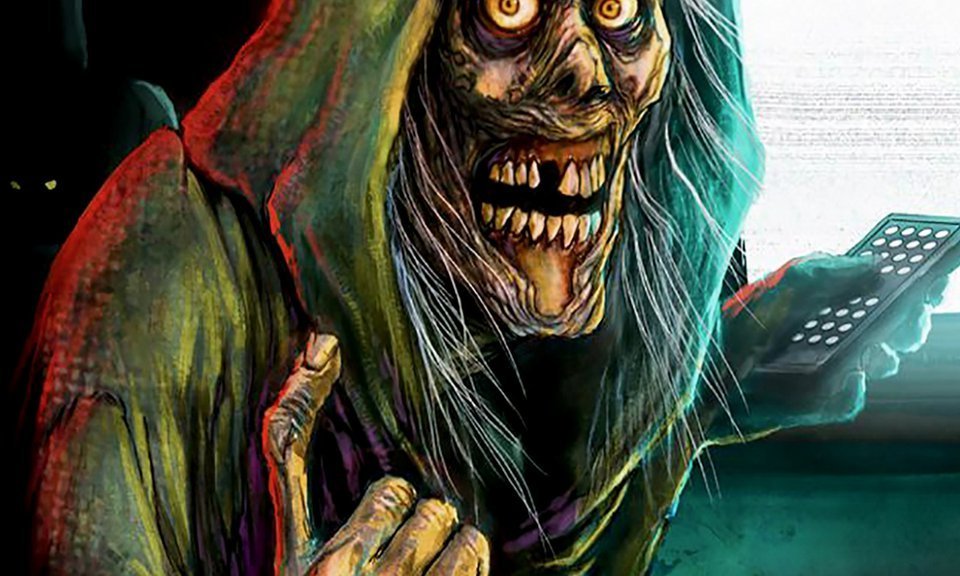
Kagegiving: CreepShow on Shudder.

INTRODUCTION: Tales from the Crypt is a very old comic, but a classic comic line. Back in the day, these EC rated comics were said to warp the mind of the baby boomer kids’ reading such filth. I’ve read reprints and it was fun. In 1989, HBO brought a show to the television, with John Kassier voicing the aptly name Cryptkeeper. It’s was a hit and spawned two flicks and a Saturday morning cartoon show in the 90’s. Unbeknownst to me back then, in 1982, Stephen King and George Romero created a similar thing, called Creepshow. It was inspired by those old comics. I didn’t know Creepshow existed until I was in my early 20’s. Weird, given I had seen a massive amount of 80’s and 90’s horror. I still haven’t seen the two flicks, but I did enjoy Tales from the Crypt and the idea of an inspired by version intrigued me enough to give this series a go.

EPISODES:

ONE
This is a very weak start, the acting is phoned in, and even Tobin Bell isn’t at his best. He is more reminiscent of his 90’s TV acting, he just doesn’t seem like he wants to be here and these things are beneath him. I can’t blame the guy, feature films pay better and you become more notable. That is a necessity to becoming a serious actor in this world. Don’t forget, after the success of the Saw flicks, it’s not like he needs the work. His legacy is set for life as well. Roles like this could only diminish it. My interjected and unsolicited opinion on Tobin Bell’s acting career aside, it is very weak. None of the characters are very well developed, it is based on a Stephen King short story which only makes this worse, because it could have been so much more. The pacing of the story is all wrong and the ending feels unresolved, which is a running theme in this series.

The second part of this one is stronger than the first outing. The young girl acts circles around the adults and the character is wicked smart. Way smarter than your average 8 year old, figuring things out quite quickly. Sadly, the story is underdeveloped and feels 100% unresolved. The conclusion was weak and lacks what was needed to make us feel like there was something at stake. This isn’t a good start to this series.

TWO
Ok, this one sounds interesting, even though it is a rip off or homage to Rob Zombie’s trailer in Grindhouse. The characters are weakly developed, the plot as well. Interesting, albeit cheap FX and over all, not as good as it could be. Still, it improves over the first episode.

Episode two seems similarly reminiscent to the old monkey paw story, which you see foreshadowed throughout the series in the ads on the comic breaks. This one is meta as all hell and I found myself enjoying it, but still, I wanted more to the story and the obvious and cliché ending was shit. This should have been developed more and given the 44 minutes of the show. It would have been worth it.

THREE
This one is a very cool, but predictable concept. I really liked it, but again, it falls victim to too short of a time frame to develop the story more and give us sympathy for the characters. Obvious ending became obvious by the muffin scene and well, it did satisfy my appetite. For those of you that hate “forced” diversity, you’ll probably trigger over not just a black dude hanging out with white people, but the fact he is Satan. Your screams of “but muh forced diversity” will be worth listening to when you also trigger over the second part.

This is one cool fucking concept, because not a lot of American produced horror is inspired by the 1001 Arabian nights. If you’re unfamiliar with Arabic folklore, then you probably would not appreciate this one as much, but it is nice to see someone actually read these short stories and kept in line with its tone. Very cool! Still though, weak developed of the stories is plaguing this series, along with characters that need more development.

FOUR
The first story is meh and the second story is even worse. See the above for the same exact criticisms. Not worth extrapolating on.

FIVE
This episode should have been longer and Bruce Davidson is the strongest actor in this whole season and worthwhile, it is too bad his young co-star looks so much worse in comparison. The story is too short, but still a very interesting take on the Monkey’s Paw story and well worth watching.
The second “story” if you can call it that is cool concept, but feels like a deleted scene from a movie. Most of the backstory has to be told via exposition and it just isn’t worth it. They really phoned it in here and it is a worthless time to have paid David Arquette the money to even bother, when he could have been in something much better.

SIX
The first story could have been a movie and would have been great social commentary on people and their desire to talk the easy way out. Sadly, it wasn’t, but despite the misgivings of this episode, it was fun.
They end the season with a story based on a Joe Hill short. This was a very cool play on the old lochness monster myths, dipped with a little too much daddy issue subtext. One has to wonder if this wasn’t about Stephen King’s time as a blow junkie, figuratively chasing after monsters during this time period, as opposed to spending time with his children and in many in interview, King as mentioned his own version of various subtext. This probably has the best looking effect, short of The Finger, but still was mediocre, given the lack of development of story, characters and terrible pacing.

CONCLUSION:
This series has a running pattern of flaws, from underdeveloped characters to terrible pacing and lack of story or suspense build. It’s on Shudder, so I am willing to deal with the FX not being the best, especially because some of them are meant to be homages to past films. The episode with the Scarecrow comes to mind as it uses 80s stop motion as an homage to The Evil Dead. There are various other Easter eggs to movies and horror tv shows for Boomers, Gen X and Millennial and those are appreciated, but I need more than Easter eggs to get me to commit to this series for another season. I mean, some of the comic breaks are clearly inspired by the old 90’s Tales from the Crypt. All Hallow’s Eve brings up 70’s Dungeons and Dragons, but uses modern miniatures, which is weird and out of place. If season two can fix the plaguing flaws of season one, this might be a real game changer, but as of right now, my plans are to skip this, it isn’t really worth the time.

2 ½ out of 5.
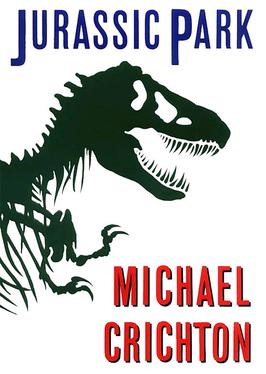
Kagegiving: Jurassic Park by Micheal Crichton.

INTRODUCTION: I loved Jurassic Park when I was a child. I first read the novel in the third grade, a few years after the movie had come out and I recall enjoying it. I later read The Lost World around the same time the movie came out. This wasn’t the only book of Mike’s that I read and enjoyed a lot of his work. So does it hold up? We shall see!

SYNOPSIS:
A group of people come to an island by one of their private investors and find out the world is filled with dinos. Then chaos ensues, because, chaos theory!

CHARACTERS:
There are a lot of differences from the characters in the movie, vs the book. Ian Malcom is more interesting in the novel than the movie. Grant likes kids here, and the ages of Tim and Lex are reversed. Jon Hammond is a douchnozzle and Nerdy is a thin hacker punk. In some ways, this is better than the movie and in other ways, it ruins it.

PROSE: Not good at all! The only bonus is that the accent is quite frenetic until you get into the middle where it bogs down and drags.

DIALOGUE: Very good!

SUBTEXT: Science is not to be trifled with and we shouldn’t be playing God.

CONCLUSION:
This book wasn’t as great as it was as a kid, but what it lacks in prose, it makes up for as one fuckin hell of a story, so it is worthwhile. If you saw the movie first, it is probably a tad bit of a downer and the science is mediocre for a dude who had a biology degree. I can see why he became a writer. Regardless, I think the biggest take away from this novel is the fact that Jon Hammond intentionally sabotaged the park. If you know anything about the MBTI, you know some ENTP’s like to intentionally cause problems so they can solve them and I think this is one of those cases. Hammond was recklessly negligent and risked his team, along with his grandchild. In this movie, he isn’t very family friendly and is a downright Scrooge, just out to make a buck. It is only fitting that Hammond, who lived by the dino also dies by the dino. Fuck this version of Jon Hammond. So is this something to be thankful for? I defer to Grant in the movie that I wouldn’t endorse this book, but it isn’t the worst novel that I ever read.

3 out of 5.

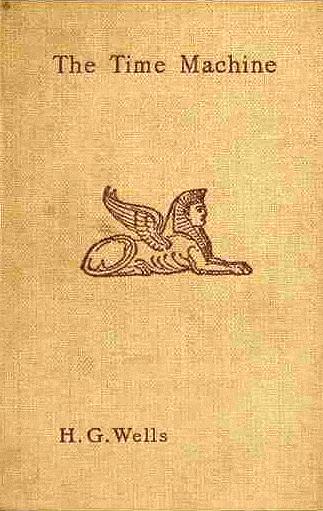
Kagegiving:The Time Machine by H.G. Wells

INTRODUCTION: H.G. Wells The Time Machine is one of those classic novels that is always on some list as a “Must read”. I read it as a child and really enjoyed it, but I decided to give it a refresh and see if it was really worthwhile in this modern age.

SYNOPSIS:
It’s the 1800’s and a man creates a time machine, so this novel is steampunk and sci-fi.

PROSE:
Prose isn’t as great as I remembered it. It has its moments but it really falls short, especially in comparison to other books of its time frame. I know it was a normal thing back then to not include faces in Gothic horror novels and while this isn’t gothic horror, he doesn’t really give us anything but a description that is barley sufficient for a police sketch artist.

CHARACTERS:
The characters all fall flat. Wells couldn’t be bothered to even give them names, nor really develop them at all. They’re all just kind of there and the one Eloi that is mentioned in detail, also happens to be childlike by Wells’ own description.

DIALOGUE: Fantastic and about all that is really worthwhile about this book.

SUBTEXT: In today’s day and age, it is indubitably about the left (Eloi) vs the Right (Morlock) and is more relevant through a Trump American than it was when it was first published.

CONCLUSION:
I was hoping this book would hold up in my adult years as I fondly remember it, but it just doesn’t hold up to snuff. It is boring, but thankfully it is such a short read that would could let your child enjoy it and they would at least pick up some good vocabulary. Besides not being that good, it boarder lines the pedophiliac in nature, which, given Lewis Carroll among others, wouldn’t of been outside the realm of normal. I mean, an adult man who intended to kidnap a female Eloi and bring her back to his time and has the demeanor of a child? Come the fuck on, it doesn’t get more pedophilic than that! I don’t think I am reading too much into that at all and sadly, it is something that is never discussed about this book. Even worse, she is more developed in terms of looks than anyone, which is ironic, given the near age of the child would make her extremely underdeveloped. Sure, you could be pollyannaish and think he just wanted to be a dad, but why steal the Eloi? Really fucked up shit that I am shocked no one picked up on, until now. I am shocked I missed that as a child, but regardless, the only thing this book really has going for it is the discussion about the two distinct races, which, in today’s day and age, which more relevant than ever, as it seems like Wells was quite prescient about the potential for two diverges on the races and one look at the divide of this country, left and right, it is hard to not see the Left as Eloi and the Right as Morlock. The majority of Trump supporters are classic blue collar labors, whom sole reason for Trump is that he somehow understands them and wants to bring back these shitty industries, like coal. They feel unheard by the Eloi or Elites as they call them and that is a sad thing, because not only do they lack a sense of irony when they toss such piffle out, but they’re mal-adaptable malcontents. Which, while I can sympathize with the malcontent part, the anti-intellectualism aspect is a horrible way to live. So in that regard, this book is fantastic, but the rest of it is just plain lousy that one has to wonder why the fuck it is a classic.

2 ½ out 5.

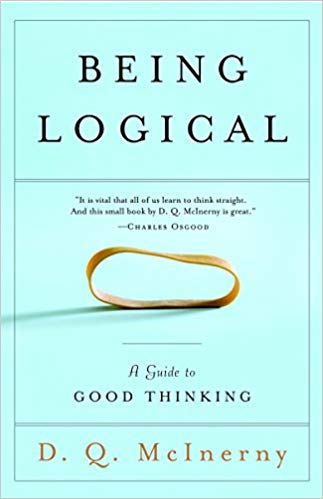
Fashionably Late Book Reviews: Being Logical by D.Q. McInerny.

INTRODUCTION: I first read Being Logical when I was in my early 20’s. I absolutely loved it then, because it was a short and concise introduction to formal logic, which is sadly, no longer taught at the college level and hadn’t been for years by the time I was old enough to attend. This is the exact book that I thought was going to be a huge game changer if you could get enough people to read it. Sadly, I was unaware back then, that a majority of the United States was highly illiterate. So sadly, upon further inspection recently, I do not think as highly of this book, given this new data, as it would be closer to a collegiate textbook for the average American than I would hope, even though it was hugely inspired by Strunk&White Elements of Style, falls way short of that book and even invokes errors that the book would of warned against. So lets look at this book through a modern lens and see who the audience is and if it is worthwhile.

PROSE: The prose is fine, albeit a tad bit too complex for the average American reader. You can tell it is also heavily influenced by Aristole’s Oragaon, as McInerny’s expression of a quantification of a thing is nearly identical to Aristole’s. In fact, it was nearly verbatim. This is extremely confusing to the most readers who wouldn’t be able to discern such and why would they? If it was an attempt is to be a cheap collegiate text for those of us whom are autodidactic than it would be fantastic, but it was meant for the normal reader as an introductory text to formal logic and it fails miserably in that respect.

FORM: Book form is fantastic! It has a section on the formal fallacies, including their original Latin names and makes for a fantastic glossary. I’ve been using it for years, along with The Philosopher’s Toolkit as glossaries to look things up, should something slip my mind. I think the average reader is going to roll their eyes at the Latin and think of this as boring though and that is a negative for the book. Albeit, I and others of my ilk will find this to be a fantastic aspect, the intended audience would not concur with us.

CONCLUSION:
This book, which should be for everyone, falls short of the mark. I’ve been pitching it for years and well, few seem to care about formal logic and thinking correctly. Typical human hubris that makes them think they’re thinking correctly, because as well all know with stupid people, they’re always correct and perfect. So, even though the audience this was intended for, would have very little use for it, it makes one hell of an introduction to Logic for everyone else. I would highly recommend this book to someone creating a high school or adult ed course on Logic and if Universities ever bring formal logic courses back, this would be a great 101 text. The average American is most likely not going to put much thought into this and probably toss it before they finished chapter one and that is a downright crime. On the textbook merits, I give it 5 out of 5 stars, even if it is a tad bit stuffy for some people. For the average American, though, I have to give it a paltry 3 out of 5. At least he tried to bring logic to Americans, and that would be commended. Thank you for such a fantastic book, even if it isn’t as appreciated as it could be.

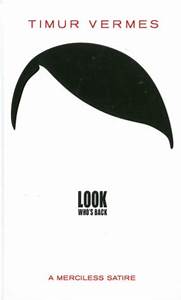
Fashionably Late Book Reviews: Look Who’s Back

INTRODUCTION: I have wanted to read this book since 2012 when it came out. It appealed to me due to the fact that I also thought, that if Hitler like thinking was to ever make a true return, it wouldn’t come back under obvious and not so subtle attempts at re-branding the NSDAP as the Alt-Right or Institute for Historical Review have attempted and failed to do. I’ve also stated in the past that nationalism was a byproduct of the welfare state. Nearly all societies that have government run anything is going to become closed off and nationalistic society, given that human beings are primitive and see money as resources and as such, they’re evolutionary prone to “team playing” in these regards. In essence, the left’s screams at the right of “Racist” are not off in the fact that those looking to close the boarders are attempting to keep American resources for Americans. Where the argument 180’s today, is that Alt-right figures also want to reduce such resources, not just for emigrants, but also for Americans of different “races”. It important to keep this in mind, as America isn’t the only ones going through ye olde 1930’s pangs and Germany has been for years and at least extremely violently since 1989. So a book like this is a must in today’s day and age. Satire has always been a foremost way to ridicule bad ideas and Nazism is no exception to the rule. That said, does this book ultimately do that?

PLOT: Hitler awakens in 2011 and finds himself in a fish out of water story as he struggles to make sense of it all.

PROSE: Not bad. It isn’t purple, but it shows more than enough. Everything is through Hitler’s point of view, so I feel like it was a missed opportunity to possibly play with Hitler’s skewed perspective. I’m not saying he had to see the world like Gobles’ propaganda, but if you have ever seen Hitler’s art, you notice something isn’t quite right about his perception of the world and that could have been an interesting aspect to play with, like how Tim Burton has a unique visual voice.

DIALOGUE: Excellent.

CHARACTERS: Timur Vermes Hitler is spot on. The only exceptions are Hitler’s speeches, which seem off in tone and not nearly as exaggerative as they could be, nor do they reflect the content of Hitler’s actual speeches. You do not need to read too many of them to know these are not Hitler’s typical oratory approach. They primarily focus on the Middle East, specifically, Turkey. I keep up on German affairs as I am still working on my German, and Muslim immigrants are a huge talking point for right wingers over there, so this is Timur Vermes having Hitler speak in a modern way, which kind of contradicts his fish out of water story at the beginning. There are quite a few of these, how do I put this, non-Hiterlian idiosyncrasies that elude to him either being a severely delusion human or the best huckster show business has ever seen. One instance has Hitler showing humanity towards someone whom he is working with and finds out she is Jewish. While Hitler did have half-Jews working for him, this still seems out of character for the Jew hating sociopath that everyone has seared into their brains. There could be a multitude of reasons for this; one could argue that this is a typical trope of literature where you give the antagonist a positive trait to offset their negative intentions. Dr.No for instance loves his cat. Hitler was great with Kids and Animals, so if that was his goal, it was a redundancy, given what we actually knew about Hitler and could have used. There is another such scene when the same woman is pregnant and Hitler thinks she and her baby daddy want to name the baby after him. Weird he would be so cool with a Jewish woman naming a child after him or the union between a German with a Germanic Jew.

I don’t suspect that Timur is secretly harboring Nazi feelings or is in anyway trying to aggrandize the Nazi leader, because while Hitler was alleged to have a good sense of humor, he most likely would have called this book, itself, propaganda, since he is portrayed as kind of inept and more of a parody of Archie Bunker than the leader of the Third Reich.

The real reason I think those speeches are not as Hitler like as they could have been is that Timur was afraid this could incidentally act as a Turner diaries and so he didn’t go all in on the speeches, least he be accidentally responsible for making neo-nazis off a satire. While I can understand such a concern, when it comes to satire, my belief, you have to go all in as his Hitler does or not bother at all.

Outside of that gripe, the other characters are not as developed as they could have been, which kind of makes sense for this novel, since he seems to be attempting to put you into the perspective of someone in Hitler’s inner circle at the time or a fan of Hitler and attempt to get you to see why people liked him in the first place, allowing you to feel that stature historians and those who knew him have claimed Hitler exuded in your presence.

SUBTEXT: I do not think it is really subtle, but ultimately Hitler is more of an analogy of Germany in this book than actually there in person. He is a spectre looming over Germany and showcases Germany’s struggle with dealing about the holocaust. This is shown in the movie as well, which is why I said it isn’t really subtle. It is kind of shoved down our throats and literally said pretty much the same way I put it. Timur also wrote the screenplay, so I would presume that is the actual intent. Always appreciated when the “subtext” is shoved in our face so we cannot have our own interpretations. Multiple interpretations, like with Dracula or Frankenstein is normally one of the ways these books have longevity, so I feel that hurts it from potentially becoming a classic, even though it could be. The accidental Rocky Horror Picture show reference as Hitler’s new slogan is pretty epic and rings of an abuse boyfriend, coming back around to the honeymoon phase to repeat the cycle, so there is at least something we could come up with ourselves or discern from the book.

CONCLUSION: While the subtext is thrown in our face and the book has a few flaws, ultimately, the book is excellent. I read it in about 16 hours and I only downloaded it last night. While I wanted to read it in the German, I couldn’t pass up the deal on Amazon, so I Kindle bought it. I am very glad I did as it still have a lot to offer and is very poignant.

To be fair, never mind the criticisms above, I feel like there is a stronger version of this novel that never came to light. Had I been writing it, I would have set it in 1986, when the fall of the Berlin wall was about to happen in 1989 and racial tensions in Germany were probably even higher than they are today, along with the impeding fall of the Soviet Union in 1991. Hess would of even been alive to have given the rouse more of a “is he, isn’t he?” kind of vibe and the idea of potentially driving Germany back into that type of state might of made the book have a bit more gravitas as a social commentary than a kind of buffoonish Conan O’Brian skit. Still, it works and it deserves

4 out of 5 stars.