All posts by Kage

What Giving Up TV and Video Games for 7 years, taught me.

     The year is 2011, I’m twenty-five years old and I am absolutely sick and tired of media and consuming it. Every other movie is a remake, every other video game is a sequel or update and television is filled with even worse television than some of the stuff I imbibed as a child growing up in the 1990’s. What is a person to do when you’re bored with the same claptrap day in, day out, year after year? You give it all up and see what happens.

     First, lets put it all out there so that we know what led into this, since it wasn’t just waking up one day and quitting. The last video game I chose to play was Modern Warfare 2, I bought a used copy of Skyrim in 2013 and beta tested The Elder Scrolls online. Before Modern Warfare 2, I had bought was MLB 2k6 in 2007, when I was 21. I finished Elder Scrolls 4 in 2011, five years after it was released, one winter, whilst having a few beers. I rented Ghostbusters: The Video Game and loved it! Gears of War was also the last series I found intriguing.

     These are all major gaps in my video game history, as an adult. So already, as I was getting older, I was moving away from video games as they were just a waste of time, constantly the same thing they yielded nothing in return. Basically, video games were a slightly healthier version of cigarettes.

     Next came television, which started at about 20. I never watched much past 18 and when I did, it was Monday Night Raw or Smackdown as well as the news. I watched the first season of Lost in 2004 and said screw this, it wasn’t good enough to keep me watching. Part of that was the poorly done, lack of tying up loose ends at the end of the season. I tried the first season of The Walking Dead and said the same thing, for similar reasons. I did find myself enjoying How I Met your Mother, but little else that I hadn’t already liked as a child or teenager.

     Movies, the last one I saw prior to Star Wars The Force Awakens was the remake of A Nightmare on Elm St , before that, The Dark Knight, Toy Story 1 and 2 3D and Friday the 13th remake, Clerks 2, Superman Returns preceded by Revenge of the Sith.

     As you can see, my desire to consume media was waning and the older I got, the more it thinned out into a watery clearness, like a glass of wine. So it wasn’t like I just got sick and tired one day, it was a long journey and the build up to freedom.

     First thing, I went back to writing a lot more like when I was a child and teenager. I quadrupled my book buys and had a lot more to discover new enjoyment. I exercised, gain weight, lost weight, gained again and lost again, and will lose weight one more time. I rode my bike again, something I hadn’t been able to do since I was a child, since we lived in areas were doing so was tough. I ended up giving my bike to a homeless man, who needed it to get to and from work and he thanked me with a hug. I brushed up my skills on middle school Spanish and learned German as well. I’m currently planning to learn three more at the very least, plus sign language. I finished multiple novels and Pre-Crime, as well as starting Bestinyourgirl.com, along with exercising my right to dissent against local politicians and making their lives an outright living hell, for their ineptitude.

     I accidentally started smoking in 2011 around the same time and actually drinking, but those are going to be easy to extirpate from my life. Well, maybe not booze entirely, but cigarettes, absolutely. Life has been really, really good in what I have been able to accomplish in such a short amount of time, within the last seven years.

     I have since decided to give some entertainment a try, after a long time away, but I don’t miss it and I am very selective on what I am willing to waste my time on. I rarely watch Netflix, but will visit the movies, I play some games from my youth, but could see myself adopting Virtual Reality games when they get more honed and I don’t think I will bother much with traditional television ever again.

     I think the journey was one of the more interesting undertakings I have ever done and would do so again in a heartbeat. You can learn so much more about yourself and I always favored a more active style in what I do as opposed to passively sitting there watching one more crap movie, one more crap show, play one more crap video game just to not even have the energy to review it, because it sucked your soul out, like a dementor at Hogwarts.

     I’m not saying what I did was right for everyone, but if you’re so inclined to give it a go, I would highly recommend it, as I think you’ll find so much more pleasure away from the mindless monotony of zombified entertainment.

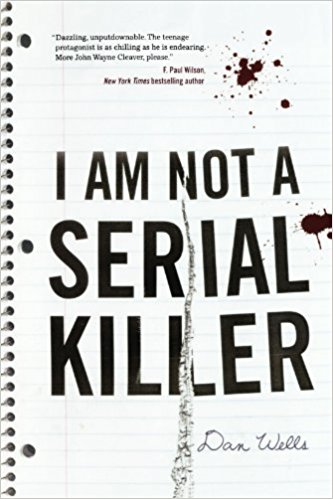
Kageoween: I’m Not a Serial Killer by Dan Wells

INTRODUCTION
     What you get when you cross Goosebumps with Dexter? You get Dan Well’s I’m Not a Serial Killer.

     You may have heard of this book, a movie was made back in 2016, staring Christopher Lloyd. It was an independent film and currently watchable on Youtube for 2.99 if you want to give it a go. I haven’t seen it yet and probably won’t, because of this book.

     For better or worse, here we go…

STORY
     A young man is haunted and tormented by his thoughts of being a serial killer, his parents are split up, his sister is living her life, he is a pariah, he has one friend, he is obsessed with serial killers and he is friends with a kindly old couple. Everything is mostly normal in John Wayne Cleaver’s world, minus the fact that a serial killer is on the loose!

CHARACTERS
     The characters are a lot shallower than an actual psychopath, let me just say that.

     John Cleaver, because I refuse to say his full banal name, is the most developed character of them all, but still a shallow puddle of a character. I could identify with some of his personality, because I enjoyed horror growing up, I wrote horror growing up and also read a lot about serial killers myself. I also was a fan of Marilyn Manson, among other out there musicians, I loved the Undertaker as a wrestler, I had toy caskets and I absolutely loved villains like Freddy Kruger, Michael Myers, Jason Vorhees, Darth Vader, The Emperor, Lex Luthor and also Hannibal Lector, the reason I got into psychology to begin with, as some of my personal favorites. My parents never ran a funeral home, though. Yes, the idea does tend to occur to you, with all the love for the macabre that one isn’t quite right in the head and you might be very strange human indeed. I mean, who watches the opening scene to Children of The Corn and wants to see more? I did, but that’s beside the point. Regardless, John Cleaver is more than normal, he just obsesses over small things like being a killer because he is an INFJ or possibly an autistic, not because he is a killer, because a serial killer wouldn’t care if he or she was one. You could argue he is an unreliable narrator, I mean, it is 2017 America within the book and the damn town has payphones. Regardless, if he is supposed to be interesting, he could struggle a bit more with right and wrong and the plight of possibility, this doesn’t even scratch the surface. I know because I’ve created stories like this, which has infinity more depth than Dan Wells has created.

     The Mom is the second best developed character who apparently is an empath, albeit, expressed piss poorly. She cares about her kids but cannot understand the weirdness with John. She causes a lot of fights and we get to understand some of the rest from John’s exposition. How much of that is trustful when he is running around saying he is a serial killer, is beyond me, though.

     That is pretty much it for developed characters. Other barley worthwhile to note characters are the aunt, sister, his friend who uses 90’s slang in 2017, his love interest, The obvious Serial Killer, who is obvious and his elderly neighbors. Oh yeah, and his shitty psychologist that diagnosis John wrong and doesn’t seem like a real psychologist.

PROSE
     Barebones, wonky and uneven throughout the whole book. Most the book is built developing his character and not well, over building suspense Dan really shows a talent for not knowing what he is doing here. He describes no one. I first thought, maybe that is showing he is devoid of a personal bent, but nope, he can describe hair and clothes piss poorly and doesn’t care to develop other characters through showing. Clearly Dan isn’t a people person and that is fine, but could you at least be inductive enough to realize that and make up for it? I used to write a similar style, but mine was because I knew that the audience, was most likely going to come up with their own version anyways, so let them. I do my best not to do that now a days and I think Dan should learn to as well, since we don’t need group of people, looking like they walked out of Pink Floyd’s The Wall.

     Never mind the fact it has awkward segways, no tension until the end, right up to a piss poor “climax”

SUBTEXT
     There isn’t any in this book outside of what it is like to live with autism, since John, regardless of his semi typical nature, seems to have a lot of the hallmarks of an autistic.

CONCLUSION
     This book seems like it was written in the 1990’s and was shelved or shopped around until it was published in 2010, when Dan finally found a blind editor, or was able to bypass one, and push this book through. The fact is, it is highly dated and this book doesn’t work in a post columbine world. This kid could and would have been red flagged anytime pass 1999. Just look at what happened to Parkland, a weird kid shot up his school, but he was red flagged innumerable times, the FBI was just too inept to take the kids threat seriously, yet Dan’s character just waltzes around, sending up “signals”, whilst everyone around acts as if their fucks have taken the day off. Factor in the aspect of it being derivative of other, better, more successful works and it makes this book seem even weaker in comparison.

     Still, the best thing I could say about this is that it reminded me of all those, in some cases bad, young adult books I used to read back in the day, like Goosebumps or Fear Street and for that, I will give it an extra star, but the rest of it isn’t worth the time and effort.

     If you want a nostalgia pop, this is right for you, no matter how badly. If you want a good book, skip this!

     2 ½ out of 5 stars

Quid Pro Quo: College and Cost

     College is worthless to a certain segment of people. Whom are these rouge few that do not need to be encumbered by college debt? People who have higher intelligence that is who!

     Why would I say people with higher intellects do not need to peruse college when they are the ones who will benefit the most? The answer lies in supply and demand. Intelligent people do not need college when they are all Mensa level of intelligence. You, the country, the employers, the private sector need the higher intelligence, they do no need your frivolity, your debt or your rules.

     Supply and demand is the core tenet of entrepreneurship. In the case of college, Demand for intelligence is at an all-time high and the supply is really low. So, what is a country to do? They attempt to circumvent the rigors of attaining a college education with an egalitarian ideal that college is for everyone, but the reality is that college is not for everyone. College is, has and always will be for the highest echelon of our humanity, the highly intelligent. These are the ones that create the computers we type on, they cure the diseases that God cannot, they do the arithmetic that gets us to Mars and they fill our lives with interest by expressing interesting theoretical concepts.

     If these people are so necessary to our lives, why do we charge them for the privilege our bettering our country? Surely, we should be offering them something, should we not?

     Well, some old people think the youth owes them a free ride, we call these entitle waste of flesh and oxygen, baby boomers. Are all of them this communistic and entitled? No, just the majority. They attempt to propagandize the youth with appeals to emotion, jingoistic slogans and attempted mandates through the first 12 years of education and fail miserably to entice the right people, because a higher intelligent person is a thinker and a thinker will not be swayed by fallacies.

     What is the country to do about this? Well, we could go back to when the college degree meant something, by making it harder to obtain, but due to baby boomer entitlement and the idea that everyone is equal, we have destroyed the traditional four year degree. It no longer has scarcity principal, thus it is no longer of massive value, nor does it give the higher intelligence among us and edge anymore.

     How do we solve this issue? We can either cancel all degrees, allowing us to start anew, which, even if the recipient of the degree is not an Einstein, he or she still earned the degree, thus, is not a fair way to go about fixing the system.

     The other solution is to restructure the school system. Given that our culture likes to keep the youth in a perpetual state of childhood for far longer, which is partially a byproduct of the ever expanding life of the average human, we should look to turning the four year, into a new version of high school, and make it “free”.

     Wouldn’t that just cause the same dilemma? No, because graduate school would become the new college. A masters and Ph.D. cannot just be had by any tom, dick or harry. They have higher scruples for obtaining those, like the four year used to have. Fewer people will have them, thus those people will have greater value and be able to get more out of life.

     Your next question is probably, but wouldn’t that smarter people have to pay for it and you said they shouldn’t have to. Yes, I did say smarter people shouldn’t have to pay for college, because they have a higher I.Q. and supply and demand makes them the commodity, ergo, they should be able to sell what they have, to those that need it. That said, by bringing back scarcity principal, those with higher intelligence would be able to invest in themselves or find a way to pay for a Ph.D. through have greater offers of money thrown at them, since very few people would be able to obtain such a high level of intellectual achievement. If there is one thing we can all agree on, it that a MD, Masters or Ph.D. is not for everyone, especially because you don’t want the person who can barely spell pickle at McDonald’s, to operate on you.

     I do think that M.D. degrees should not be paid for by those who are able to do that job, because they will pass the cost of such onto the consumer, in typical business fashion and is one of the many reasons that medical cost are so high. Not everyone working in that field is making a lot of money. The price commanded by surgeons only comes through specialization, like oncology, proctology or the like, which has, you guessed it, scarcity principal attached to it and by the excessive amount of experience attached to them, in order to even get the degree in the first place. Your average registered nurse, in some municipals, will pay less than a couple grand for his or her training.

     This brings me to my next point, how it will bring down cost in terms of medical for all. Medical is obviously very expensive, otherwise we wouldn’t have public intellectuals opining about how we should make it free. I’ve already pointed out that extirpating the cost of the M.D. would add one less burden onto the load that is the medical debacle. The next step would be medical technology and producing more and better products, working towards reducing cost. One of the axioms that governs technological advances is that it doubles every two years. If you’re about my age, you will remember the bit wars of the late 80’s and early 90’s, where each company was being braggadocious about their hardware being 16, 32 and 64 bits of pure gaming bliss. If you notice, 32 is 16 doubled and 64 is 32 doubled. At present, an Xbox One and a PlayStation 4 would be considered 256 bits, if the gaming industry still used the terminology.

     Now, I could get an Atari, made in 1972, before it gained in value due to nostalgia, scarcity and being retro cool, for about 10 bucks, only twenty years after its release. Yet, we’re over 100 years since the creation of the X-ray and it still cost thousands of dollars. The reason for this is partially because, unlike normal technology, there is not enough people in the world to produce this technology, causing it to double the power and which would help to alleviate the price of your mundane medical test, like an X-ray.

     Allow me to encapsulate as follows, intelligence in our society is a commodity. Making intelligent people pay for college is only going to cost us in the long run. The four year has run its course and now worthless and must be replaced with a higher tier in order to make college worthwhile again. Medical, being a necessity, cannot force debt on the few who can do such a task, as that will inflate cost for routine test. Turning the four year into the new high school diploma, will result in focusing on important degrees and getting the right people placed into these fields, which will cause trickle intellecualnomics, resulting in a net benefit for humanity.

     The future is in restructuring the system.

Why I Hate Modern Prose

     The only thing tougher than being a writer sometimes, is being a reader. I’ve had the chance to read some blogs, articles, poems and the like and find those to be pretty well done and in some cases, writing far better than my own. Don’t get me wrong, I still adore books and reading, but the last 10 years have made me really sadden and depressed when it comes to the novel, primarily.

     In no period of human history, short of the 1800s until about the invention of the television set, has the novel been the primary form of a person’s love and adoration, baring the few of us who really enjoy it, to the point our rooms look like Belle’s Library in Beauty and the Beast. The irony here is the amount of people who want to write one at some point in their lives far outnumbers the amount of readers.

     It doesn’t take much to find books in today’s day and age, but the amount isn’t the problem, it’s the prose that is and with that, I am depressed, because with so many more options, there could be so much better writing.
I don’t pretend to be the William Shakespeare of my generation, only with a modicum of luck and ingenuity, I may be able to make such beautiful works myself. That said, I still think most of what is floating around out there is rubbish. It makes it hard as a reviewer sometimes to find things that I would love to write about, when every other book is a 50 Shades of Gray.

     I look at The New York Times bestsellers list and I still see a lot of the same authors adorning it as when I was a child. I’m a 32 year old man, in 6 months I shall be 33. While 33 years on this planet may not be the longest amount of time to have lived, it is long enough to know that it is a problem when I can only come across the same authors, some who have been writing longer than I have been on this planet, on The New York Times bestsellers and wonder why these are the only authors I can come across. When it isn’t the same author’s, sometimes it’s their children. Is there no one new?

     Not a single person on that list doesn’t deserve their success, they merited it, but I can’t help but think of how much that success is partly owned to gauging the work by the amount of money it makes as opposed to the prose. Don’t even get me started on the awards, I don’t believe for a second an award has any meaning anymore. Game of Thrones has a Nebula award, I shit you not. How does something like this happen? Do reviewers not even know how to do their jobs anymore? There once was a time when the critic meant something, they were people who understood their niche in reviewing. They understood beautiful prose and exquisite story telling. Now everyone is a critic, but not a good one. Critics remind me of the age old adage about everyone having a novel in them and in most cases, that is where it should stay, except replace novel with criticism. Being a critic is no longer for the sake of intellectualizing about books anymore, but serves only to exist for one more asshole to attach Stephen King, George R.R.Martin, Ann Rice, J.K. Rowling, Vince Flynn, James Patterson, Dean Kootz, Joe Hill or some other more successful writer than they are for SEO and chase that $0.01 blimp from drawing someone into their blog. It works too! I don’t blame people for doing this, it is human nature, looking to capitalize and make money, but we’re people are struggling over pennies, when most of you couldn’t even be bothered to bend down on the street to pick one up. Irony is when not even 10 years ago, the government seriously considered phasing out the penny, but when the same object is digital, it is gold!

     Writing is hardly the only spectrum to be hit with this, one look at the trends on Youtube and we can see a generic no name rapper attacking a well-established star to get themselves over with the crowd.

     The new age where anyone can now go out and do whatever they wanted hasn’t helped much to alleviate this at all. Now there is so many more options, but who am I going to read? You have to do so much more footwork now a day, because an award is as meaningless as doing household chores, critics have no fucking clue what they’re talking about, they just want to be blow hards for the sake of being blow hards, your average fan with no special knowledge of writing doesn’t know shit from shinola, but they know what they like and with any typical fan they will gush about you from here to Alaska without missing a beat, because of how you made them feel.

     I know having guardians that can decide to can and cannot publish isn’t a great thing for most people, because they too, are all about marketability when it comes to books and each year, we lose out on amazing potential authors who deserved to have their book published, but when the opposite end of the spectrum offers the same set up, are creators and consumers really winning? Is there no happy medium where we can concentrate on beautiful prose and still have the occasional 50 Shades of Gray, instead of attempts to rank in Google searches, monetization, attack artist you once enjoyed, boycott things, frivolously on Twitter, because they threaten you, not because you actually believe in the bullshit you espouse? Just to get that pittance of money? I don’t think so, and to quote Bill Hick’s, “All my heroes are dead!” I’m glad too, because I couldn’t imagine how I might feel if they were alive and doing this shit!

     I’m not free of absolution here, I am just as complicit as anyone, because of my desire to write and communicate my thoughts so they can be understood from a wide audience and you do not have to have a Ph.D to understand my writing. I sold out, a long time ago and I don’t know if I am better or worse off for it.

     After reading Dracula the other night and coming away from it, feeling as I did when I was a kid, just discovering books for the first time, I had this epiphany. It wasn’t even just the book that inspired this piece, it is partially brewing for a while, because of critic’s ineptitude and then there is the fact Twitter has also allowed me to see deeper than any other social media. Looking at random accounts, some with blue check marks, and not for real world success. There are people who have fans, just for being fans. What the fuck is wrong with this world? 20k followers just for enjoying things. Meanwhile, I watch people who have actually worked in Hollywood, with fewer followers than your random blogger and have to wonder to myself, what the fuck! Who would want to write and especially well, when your fans will end up with a better following just for loving you?

     I don’t profess to have all the answers in regards to this, but I do know, I don’t like this new world, one that is championing mediocrity and promoting idiocrasy. Up until now, I wasn’t like a lot of people with nostalgia for the past, because I don’t miss it. I do miss discovering good lit though and that, if anything, is what truly has be nostalgic. I defer to Kylo Ren when he said “Let the past die, it’s the only way to become what you were truly meant to be.” Couldn’t that be at a higher plane than we are now, though?

———————
Slight edits to text 14 OCT 2018 9:29 AM

Elitest Snobbery 101 or No, you don’t own that!

     Progressive, what a scary word! The right tossed it around as another word for the Socialist, leftist embraced its use as a euphemism for communism, but it in no way does this word mean socialism or communism. So what exactly does progressive mean? It means to advance, to progress and to move forward.

     Why then, is it becoming a bad word like Liberal was made out to be in the 1960s? What is so collectivist about that word? Surely a business man who expands his business and creates more jobs for Americans is being progressive, is he not?

     If being a progressive is a bad thing, then those of you who are in opposition to progress must be regressive, right? You wish to go backwards in our country and bring back years of horrible oppression towards people of difference, archaic laws that squelched human rights and dignity or downright hurt others, then? What’s that you say? You are not for regressing. Oh, so that would make you a progressive, would it not? You want to move forward then, right?

     The difference is only in how we agree to do it. Everyone is a progressive. We all want to move forward and better ourselves. Isn’t that what life is about? If we didn’t progress, wouldn’t we all still be living with our parents? That would be one huge collective house hold, the likes America hasn’t seen since the 1800s.

     So we must advance the dialogue in this country, not use fear to sway public opinion. Those who would seek to influence public opinion with propaganda must be called out and chastised for it, not heralded. Words cannot be high jacked by just one party alone, nor can they be used to slander individuals for their thoughts. Words are not meant to be owned by just one individual, they’re here for all of use to communicate with one another. Humans are meant to use them to form whole sentences, which create paragraphs, which exhibit meaning, in order to use them to elucidate on ideas, refute abhorrent trains of thought or otherwise engage in a civil discourse that propels the narrative forward. The next time you hear someone use progressive like it’s a bad thing, remind them that our country was founded by progressives and built up by progressives. That city you live in? It was built by progressives. That car you drive? It was built by progressives. God himself, if you believe in him or her, was a progressive.

     It’s time to take words back and use it in its proper context, along with other words being blindly molested by nefarious actors, looking to get a quick blip of emotion out of otherwise, rational humans, if not for desire to be team players. Being progressive is not dirty, socialistic or communist. It’s the American way. American exceptionalism is built on American progressivism. After all, we all want what is best for America, don’t we?

     So are you progressive or regressive?

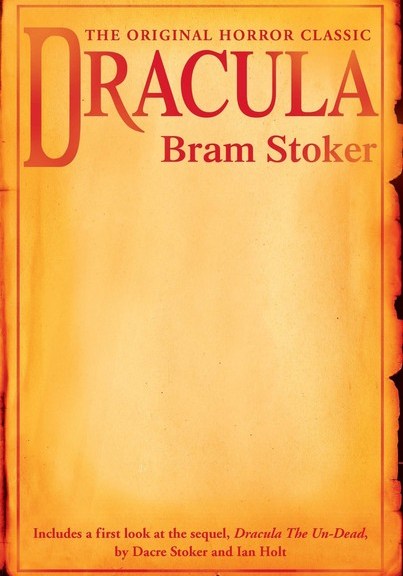
Kageoween: Dracula Book Review

INTRODUCTION

     Bram’s Stoker’s magnum opus, Dracula is 121 years old this year and has been read, re-read and passed on from generation to generation as the granddaddy of all horror works. It has been ripped off, in the 1920’s, with Nosferatu. Bram himself, took elements of Carmilla and incorporated it into his work and a reference to that is included in the deleted chapter of Dracula, the short story called Dracula’s Guest. It has been made into umpteen dozen flicks, starting with Dracula in 1930’s, the Hammer films of the 1970’s and a remake from 1992 by Francis Ford Coppola and many more into the 2000’s. It’s safe to say this Iconic bad-ass won’t be going away anytime soon and he will continue to inspire for generations to come.

     How does the book hold up in our modern world? Let’s find out!

SYNOPSIS

     October 11thDracula is an espitsoly work, meaning it is told through letters, journals and other similar tropes. You have 4 main characters, plus two villains. The protagonist are Lucy Westerna, Mina Harker, Johnathan Harker, Dr. Van Helsing and Arthur. The antagonist are Dracula and his servant Renfeild.

     Our story opens with Johnathan Harker siting in a restaurant, enjoying some chicken and paprika dish, which he refers to as thirsty, which, is already brilliant before we’re even out the gate. John is a solicitor for Dracula, come to close a deal so the count can move to London and enjoy the beauty of 18th century England. On his journey, Harker continually runs into fantastic use of foreboding and tension building. Harker, a subtle atheist, which we soon find out, doesn’t quite understand the superstition of the town’s people, who give him multiple gifts for protection, on his way to Count Dracula’s castle. Garlic, a crucifix and typical anti-vampire devices. Memo-how the hell are the towns people so hip to fighting off vampires, but Dracula, in his weakened state, still lives to instill fear in the village?

     Once he has made his way to Dracula’s castle, we’re introduced to some, well, peculiar aspects of the count’s life. The count never seems to eat, he sleeps during the day, keep Johnathan up all night with daring tales of battles long past and he has no servants. He does have three vampress’ in his basement, like a boss, who are easily aroused by young blood and he has an exquisite library.

     During his stay at Dracula’s castle, Harker starts to realize he is a prisoner and discovers strange things about the count, like his despising of Harker looking into a mirror, claiming disgust at such vanity, clearly a brilliant foreshadow, but also a dig at the 1800’s culture of beauty above all.

     One night, Johnathan is awoken by the vampires coming towards him, when they’re quickly shut down by the count, who has other plans for Harker and tosses them a fun size snack, or an infant, however you want to see it. Memo-why do reviewers never point out the interesting male homosexual subtext to this, but imply it all throughout Carmilla?

     We leave the castle and start to be introduced to Lucy and Mina, both of whom are pollyannaish as fuck. That in and of itself, is an understatement, because there are infants with better street smarts, but I digress. Reminder- we’re in the 1800’s, not 2018, so it works.

     At first life is normal for both Mina and Lucy, but things start to get weirder and weirder after a boat mysteriously makes it to shore with everyone dead, which is clearly a brilliant reference to The Lost World: Jurassic Park… Note-apparently this book predates that movie, interesting, must remember this.

     Lucy is the first to be turned into a vampire and is subsequently killed by Dr. Van Helsing, a brilliant mind, who is clearly one of the best Ahab’s ever put into lit.

     It doesn’t take long for the Scooby gang and Giles I mean, our protagonist to realize that Dracula is behind all this and the build up to the climax is truly fantastic suspense the likes few could emulate.

CHARACTERS

     It doesn’t take much to note that Bram is a very social human being. He has a nack for people, which is unusual for Gothic horror, given one of its traits is usually emphasis on landscapes and buildings.  He has taken great care to elucidate on each of the individuals quirks, mannerisms, demeanor, educational history and more, through brilliant prose. Stoker wasn’t fucking around here and it couldn’t be shown any better.

     Each character is truly different in how they engage each other and how they come to their conclusions throughout this gem of a novel.

     My two personal favorite characters are Dracula and Van Helsing and love how well they’re written and brought to life. Van Helsing is clearly the old guard, his speech is archaic as opposed to the younger characters in the book. He is wisen, he is experienced, he has seen all the offerings life has to give and has lived to tell the tale. Dracula is similar in this regard, but they’re still vastly different characters. Almost like Michael Myers and Dr. Loomis. The best dialogue easily belong to these two. Although, I appreciate Renfeild, for the seemingly satirical take on Psychology at the time that he represents and at the same time how he is a subtle dig on people following trends before growing bored of them as a form of insanity, vs chasing your passions, regardless of what people think.

     The only really bad thing is in regards to character arcs and how easily some characters switch gears in their beliefs of wampires. Some need little convincing, or it seemed that way and the only real growth by the end is Mina, in my mind.

     Despite that small bit of criticism, everything else is on point.

PROSE

     Wonderful, beautifully written and very picturesque. It is written in a more modern prose than most novels of its age and this was clearly intentional from the getgo. It also helps us with understanding characters, since Van Helsing is older and speaks in a way more reminiscent of the style of the times. Bram doesn’t just stop there, though, he adds a bunch of fun Easter eggs through out, you need to find them, but they’re there and fun to see the references to old stories and science.

     Bram likes to refer to Dracula unspecificly at times as Him and He and It. The most peculiar part about it, is that it would otherwise be grammatically incorrect, if not for character building prior to its use. Only one other mention gets this treatment that is God himself, because it is grammatically correct. This suggest that it was intentionally done and subtly builds Dracula up to being a God himself, but in the reserve, almost like Dracula is a different take on Lucifer.

     It wouldn’t be an understatement to refer to him as the Shakespeare of the Gothic horror novel.


THEMES AND SUBTEXT

     In 121 years, I am sure a lot has been found. Some people see it as an analogy for immigration, for sexuality and the social mores at the time whilst others see it as just an adventure book.

     A lot of critics of the day didn’t quite appreciate the modernity of the story, especially featuring typewriters, among other items. One could argue that the subtext of the younger generation vs the older generations are too hard to ignore, especially when you factor in the detraction for being modern and I wouldn’t refute that idea, it is a valid take away.

     I personally think, the immigration aspect, is only a fraction of the take away that Bram most likely, subconsciously meant.

     One of Bram’s earlier works was about a young immigrant, who works at a theater and is married to a faithful wife, when they immigrate to London so the man can get a better job. He becomes paranoid of his wife’s infidelity, which would have been a bigger no no then, then it ever was.  It ends with him killing his wife.

     Now, what could that have to do with Dracula? Well, some of that book is autobiographical. Bram, who worked at a theater, immigrated with his wife to London, seeking better work. The only difference is his wife, as far as we know, wasn’t unfaithful, nor did Bram kill his wife. Given this aspect, it is tough to ignore that Dracula is really a fish out of water story, with Dracula as analogous to Bram himself and representative of his fears of leaving his home country, moving to London and being an outsider. Much like Bram showcased his knowledge of multiple topics through prose, such as chemistry, philosophy, science and psychology, so too, did Dracula, who wanted to fit in. Bram, clearly being sociable, exhibited a desire to assimilate to the culture. It should also be noted that all of those who didn’t quite appreciate the book, happen to be hugely Anti-social, the most notable of which was H.P. Lovecraft, scoffing about the book being great because it had an editor. Lovecraft’s criticism is invalidated when you realize he was anti-social, but also, racist as hell. Clearly he couldn’t relate to Bram and as such, he didn’t enjoy the novel, which is a shame and quite the contradiction for an anti-social human. I also believe Lovecraft was jealous, because he couldn’t write half as well as Bram could and it was noticeable in his thoughts on the book.

     Regardless, I believe immigration is the right take away from this, albeit, in a different context than most suppose it to be.

CONCLUSION

     Bram Stoker is one of the best writers to have ever lived. Despite minuite flaws, such as lack of character arc, some literary solipsism, since you have to be really well read to appreciate this deeper, I can’t help but see it as the near perfect novel it is. I took three pages of notes and still feel this review to be too short, as there is so much more that can still be said on this book after 121 years. It stood the test of time because it really is the best of the genre and no one has come close, not even Stephen King himself, to beating Bram as best horror writer ever.

     This is one of the few books that you can finish and desire to read again, right away. It is more than a novel, it is an experience. Older reviews from the time, point out its gory nature, but it isn’t there. They imagined it because Bram was a genius in how he wrote. Much like Halloween, the 1978 original, you only think it was a blood bath, the reality is so more was left to be imagined.

     The only suitable score for this book is

10 stars out of 5.

———-
Minor corrections to the text, 11th OCT 2018 9:18 pm