Category Archives: Books

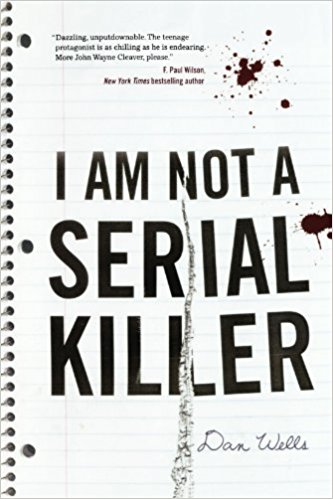
Kageoween: I’m Not a Serial Killer by Dan Wells

INTRODUCTION
     What you get when you cross Goosebumps with Dexter? You get Dan Well’s I’m Not a Serial Killer.

     You may have heard of this book, a movie was made back in 2016, staring Christopher Lloyd. It was an independent film and currently watchable on Youtube for 2.99 if you want to give it a go. I haven’t seen it yet and probably won’t, because of this book.

     For better or worse, here we go…

STORY
     A young man is haunted and tormented by his thoughts of being a serial killer, his parents are split up, his sister is living her life, he is a pariah, he has one friend, he is obsessed with serial killers and he is friends with a kindly old couple. Everything is mostly normal in John Wayne Cleaver’s world, minus the fact that a serial killer is on the loose!

CHARACTERS
     The characters are a lot shallower than an actual psychopath, let me just say that.

     John Cleaver, because I refuse to say his full banal name, is the most developed character of them all, but still a shallow puddle of a character. I could identify with some of his personality, because I enjoyed horror growing up, I wrote horror growing up and also read a lot about serial killers myself. I also was a fan of Marilyn Manson, among other out there musicians, I loved the Undertaker as a wrestler, I had toy caskets and I absolutely loved villains like Freddy Kruger, Michael Myers, Jason Vorhees, Darth Vader, The Emperor, Lex Luthor and also Hannibal Lector, the reason I got into psychology to begin with, as some of my personal favorites. My parents never ran a funeral home, though. Yes, the idea does tend to occur to you, with all the love for the macabre that one isn’t quite right in the head and you might be very strange human indeed. I mean, who watches the opening scene to Children of The Corn and wants to see more? I did, but that’s beside the point. Regardless, John Cleaver is more than normal, he just obsesses over small things like being a killer because he is an INFJ or possibly an autistic, not because he is a killer, because a serial killer wouldn’t care if he or she was one. You could argue he is an unreliable narrator, I mean, it is 2017 America within the book and the damn town has payphones. Regardless, if he is supposed to be interesting, he could struggle a bit more with right and wrong and the plight of possibility, this doesn’t even scratch the surface. I know because I’ve created stories like this, which has infinity more depth than Dan Wells has created.

     The Mom is the second best developed character who apparently is an empath, albeit, expressed piss poorly. She cares about her kids but cannot understand the weirdness with John. She causes a lot of fights and we get to understand some of the rest from John’s exposition. How much of that is trustful when he is running around saying he is a serial killer, is beyond me, though.

     That is pretty much it for developed characters. Other barley worthwhile to note characters are the aunt, sister, his friend who uses 90’s slang in 2017, his love interest, The obvious Serial Killer, who is obvious and his elderly neighbors. Oh yeah, and his shitty psychologist that diagnosis John wrong and doesn’t seem like a real psychologist.

PROSE
     Barebones, wonky and uneven throughout the whole book. Most the book is built developing his character and not well, over building suspense Dan really shows a talent for not knowing what he is doing here. He describes no one. I first thought, maybe that is showing he is devoid of a personal bent, but nope, he can describe hair and clothes piss poorly and doesn’t care to develop other characters through showing. Clearly Dan isn’t a people person and that is fine, but could you at least be inductive enough to realize that and make up for it? I used to write a similar style, but mine was because I knew that the audience, was most likely going to come up with their own version anyways, so let them. I do my best not to do that now a days and I think Dan should learn to as well, since we don’t need group of people, looking like they walked out of Pink Floyd’s The Wall.

     Never mind the fact it has awkward segways, no tension until the end, right up to a piss poor “climax”

SUBTEXT
     There isn’t any in this book outside of what it is like to live with autism, since John, regardless of his semi typical nature, seems to have a lot of the hallmarks of an autistic.

CONCLUSION
     This book seems like it was written in the 1990’s and was shelved or shopped around until it was published in 2010, when Dan finally found a blind editor, or was able to bypass one, and push this book through. The fact is, it is highly dated and this book doesn’t work in a post columbine world. This kid could and would have been red flagged anytime pass 1999. Just look at what happened to Parkland, a weird kid shot up his school, but he was red flagged innumerable times, the FBI was just too inept to take the kids threat seriously, yet Dan’s character just waltzes around, sending up “signals”, whilst everyone around acts as if their fucks have taken the day off. Factor in the aspect of it being derivative of other, better, more successful works and it makes this book seem even weaker in comparison.

     Still, the best thing I could say about this is that it reminded me of all those, in some cases bad, young adult books I used to read back in the day, like Goosebumps or Fear Street and for that, I will give it an extra star, but the rest of it isn’t worth the time and effort.

     If you want a nostalgia pop, this is right for you, no matter how badly. If you want a good book, skip this!

     2 ½ out of 5 stars
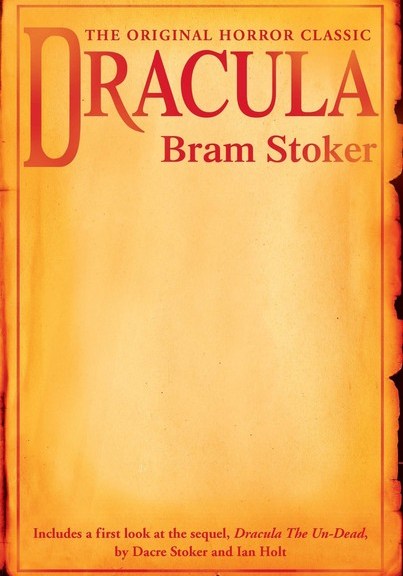
Kageoween: Dracula Book Review

INTRODUCTION

     Bram’s Stoker’s magnum opus, Dracula is 121 years old this year and has been read, re-read and passed on from generation to generation as the granddaddy of all horror works. It has been ripped off, in the 1920’s, with Nosferatu. Bram himself, took elements of Carmilla and incorporated it into his work and a reference to that is included in the deleted chapter of Dracula, the short story called Dracula’s Guest. It has been made into umpteen dozen flicks, starting with Dracula in 1930’s, the Hammer films of the 1970’s and a remake from 1992 by Francis Ford Coppola and many more into the 2000’s. It’s safe to say this Iconic bad-ass won’t be going away anytime soon and he will continue to inspire for generations to come.

     How does the book hold up in our modern world? Let’s find out!

SYNOPSIS

     October 11thDracula is an espitsoly work, meaning it is told through letters, journals and other similar tropes. You have 4 main characters, plus two villains. The protagonist are Lucy Westerna, Mina Harker, Johnathan Harker, Dr. Van Helsing and Arthur. The antagonist are Dracula and his servant Renfeild.

     Our story opens with Johnathan Harker siting in a restaurant, enjoying some chicken and paprika dish, which he refers to as thirsty, which, is already brilliant before we’re even out the gate. John is a solicitor for Dracula, come to close a deal so the count can move to London and enjoy the beauty of 18th century England. On his journey, Harker continually runs into fantastic use of foreboding and tension building. Harker, a subtle atheist, which we soon find out, doesn’t quite understand the superstition of the town’s people, who give him multiple gifts for protection, on his way to Count Dracula’s castle. Garlic, a crucifix and typical anti-vampire devices. Memo-how the hell are the towns people so hip to fighting off vampires, but Dracula, in his weakened state, still lives to instill fear in the village?

     Once he has made his way to Dracula’s castle, we’re introduced to some, well, peculiar aspects of the count’s life. The count never seems to eat, he sleeps during the day, keep Johnathan up all night with daring tales of battles long past and he has no servants. He does have three vampress’ in his basement, like a boss, who are easily aroused by young blood and he has an exquisite library.

     During his stay at Dracula’s castle, Harker starts to realize he is a prisoner and discovers strange things about the count, like his despising of Harker looking into a mirror, claiming disgust at such vanity, clearly a brilliant foreshadow, but also a dig at the 1800’s culture of beauty above all.

     One night, Johnathan is awoken by the vampires coming towards him, when they’re quickly shut down by the count, who has other plans for Harker and tosses them a fun size snack, or an infant, however you want to see it. Memo-why do reviewers never point out the interesting male homosexual subtext to this, but imply it all throughout Carmilla?

     We leave the castle and start to be introduced to Lucy and Mina, both of whom are pollyannaish as fuck. That in and of itself, is an understatement, because there are infants with better street smarts, but I digress. Reminder- we’re in the 1800’s, not 2018, so it works.

     At first life is normal for both Mina and Lucy, but things start to get weirder and weirder after a boat mysteriously makes it to shore with everyone dead, which is clearly a brilliant reference to The Lost World: Jurassic Park… Note-apparently this book predates that movie, interesting, must remember this.

     Lucy is the first to be turned into a vampire and is subsequently killed by Dr. Van Helsing, a brilliant mind, who is clearly one of the best Ahab’s ever put into lit.

     It doesn’t take long for the Scooby gang and Giles I mean, our protagonist to realize that Dracula is behind all this and the build up to the climax is truly fantastic suspense the likes few could emulate.

CHARACTERS

     It doesn’t take much to note that Bram is a very social human being. He has a nack for people, which is unusual for Gothic horror, given one of its traits is usually emphasis on landscapes and buildings.  He has taken great care to elucidate on each of the individuals quirks, mannerisms, demeanor, educational history and more, through brilliant prose. Stoker wasn’t fucking around here and it couldn’t be shown any better.

     Each character is truly different in how they engage each other and how they come to their conclusions throughout this gem of a novel.

     My two personal favorite characters are Dracula and Van Helsing and love how well they’re written and brought to life. Van Helsing is clearly the old guard, his speech is archaic as opposed to the younger characters in the book. He is wisen, he is experienced, he has seen all the offerings life has to give and has lived to tell the tale. Dracula is similar in this regard, but they’re still vastly different characters. Almost like Michael Myers and Dr. Loomis. The best dialogue easily belong to these two. Although, I appreciate Renfeild, for the seemingly satirical take on Psychology at the time that he represents and at the same time how he is a subtle dig on people following trends before growing bored of them as a form of insanity, vs chasing your passions, regardless of what people think.

     The only really bad thing is in regards to character arcs and how easily some characters switch gears in their beliefs of wampires. Some need little convincing, or it seemed that way and the only real growth by the end is Mina, in my mind.

     Despite that small bit of criticism, everything else is on point.

PROSE

     Wonderful, beautifully written and very picturesque. It is written in a more modern prose than most novels of its age and this was clearly intentional from the getgo. It also helps us with understanding characters, since Van Helsing is older and speaks in a way more reminiscent of the style of the times. Bram doesn’t just stop there, though, he adds a bunch of fun Easter eggs through out, you need to find them, but they’re there and fun to see the references to old stories and science.

     Bram likes to refer to Dracula unspecificly at times as Him and He and It. The most peculiar part about it, is that it would otherwise be grammatically incorrect, if not for character building prior to its use. Only one other mention gets this treatment that is God himself, because it is grammatically correct. This suggest that it was intentionally done and subtly builds Dracula up to being a God himself, but in the reserve, almost like Dracula is a different take on Lucifer.

     It wouldn’t be an understatement to refer to him as the Shakespeare of the Gothic horror novel.


THEMES AND SUBTEXT

     In 121 years, I am sure a lot has been found. Some people see it as an analogy for immigration, for sexuality and the social mores at the time whilst others see it as just an adventure book.

     A lot of critics of the day didn’t quite appreciate the modernity of the story, especially featuring typewriters, among other items. One could argue that the subtext of the younger generation vs the older generations are too hard to ignore, especially when you factor in the detraction for being modern and I wouldn’t refute that idea, it is a valid take away.

     I personally think, the immigration aspect, is only a fraction of the take away that Bram most likely, subconsciously meant.

     One of Bram’s earlier works was about a young immigrant, who works at a theater and is married to a faithful wife, when they immigrate to London so the man can get a better job. He becomes paranoid of his wife’s infidelity, which would have been a bigger no no then, then it ever was.  It ends with him killing his wife.

     Now, what could that have to do with Dracula? Well, some of that book is autobiographical. Bram, who worked at a theater, immigrated with his wife to London, seeking better work. The only difference is his wife, as far as we know, wasn’t unfaithful, nor did Bram kill his wife. Given this aspect, it is tough to ignore that Dracula is really a fish out of water story, with Dracula as analogous to Bram himself and representative of his fears of leaving his home country, moving to London and being an outsider. Much like Bram showcased his knowledge of multiple topics through prose, such as chemistry, philosophy, science and psychology, so too, did Dracula, who wanted to fit in. Bram, clearly being sociable, exhibited a desire to assimilate to the culture. It should also be noted that all of those who didn’t quite appreciate the book, happen to be hugely Anti-social, the most notable of which was H.P. Lovecraft, scoffing about the book being great because it had an editor. Lovecraft’s criticism is invalidated when you realize he was anti-social, but also, racist as hell. Clearly he couldn’t relate to Bram and as such, he didn’t enjoy the novel, which is a shame and quite the contradiction for an anti-social human. I also believe Lovecraft was jealous, because he couldn’t write half as well as Bram could and it was noticeable in his thoughts on the book.

     Regardless, I believe immigration is the right take away from this, albeit, in a different context than most suppose it to be.

CONCLUSION

     Bram Stoker is one of the best writers to have ever lived. Despite minuite flaws, such as lack of character arc, some literary solipsism, since you have to be really well read to appreciate this deeper, I can’t help but see it as the near perfect novel it is. I took three pages of notes and still feel this review to be too short, as there is so much more that can still be said on this book after 121 years. It stood the test of time because it really is the best of the genre and no one has come close, not even Stephen King himself, to beating Bram as best horror writer ever.

     This is one of the few books that you can finish and desire to read again, right away. It is more than a novel, it is an experience. Older reviews from the time, point out its gory nature, but it isn’t there. They imagined it because Bram was a genius in how he wrote. Much like Halloween, the 1978 original, you only think it was a blood bath, the reality is so more was left to be imagined.

     The only suitable score for this book is

10 stars out of 5.

———-
Minor corrections to the text, 11th OCT 2018 9:18 pm

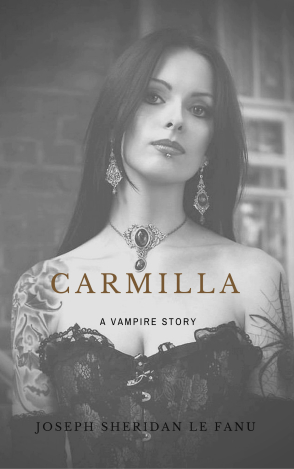
Kageoween: Carmilla Book Review

INTRODUCTION
     Carmilla is one of the earliest vampire stories and the inspiration behind Bram Stoker’s Dracula, apparently. Besides this, the only other known source for vampire mythos prior to Dracula is Varney the Vampire, a penny dreadful, which was sold on the streets for a penny back in the 1800’s.

     Much has been said about this novel, mostly the balls on J. Sheridan LeFanu, for adding Sappho eroticism in a time frame when such would have been on par with child molesting today.

     So, what does it come off as in 2018 and is it really any good? The answer, probably won’t surprise you!

STORY
     A young woman lives with a family when strange occurrences start to, well, occur, leading to a less than suspenseful build up to the climax of wow, vampire.

PROSE
     The prose has moments of sheer beauty throughout its page. If written in a modern voice, I think the story would fail even more. Part of the charm is that 1800’s style narration with beautiful prose in some places and misplaced telling aspects that could of be written better.

CHARACTERS
     The characters are mostly shallow, but still enough to get an idea for their personalities. No one character really sticks out in my mind, except for the father of the young woman who is friends with the vampress title character. He is a weird scientist of sorts and I don’t mean a literal scientist, I mean, he looks for the simplest explanation of a situation, but in the same breathe is glad that it wasn’t witches. I like this weird, juxtaposition between science and superstition. The original inspiration for Van Helsing is also present, but he isn’t as developed as he is in Dracula, but you can see where the inspiration came from, but it was less homage and more a “Hold my beer” moment, as Bram Stoker showcased he could do it better.

SUBTEXT
     Unlike other reviewers, most of whom are also male, I don’t find lesbianism to be a subtext of this book. I think it is inferred by men with an inkling of homoeroticism for other men, who have projected their desires on two characters.

     I know Vampires are known for their sensual nature, but they’re predators mostly, they’re also dead, thus they really don’t have a sexuality at all. I also find it weird that these same reviewers never spot male homosexual subtext in Dracula or other novels about vampires. Interview with the Vampire comes to mind with blatant male homoerotism, of which no one ever points out or holds up in esteem. The homosexuality is especially noticeable in the movie of Interview with the Vampire, where the sexual ambiguity between Brad Pitt and Tom Cruise is so thick, you could cut the fuckin thing with a knife. Just like this book, 90’s male homosexuality would have been considered loathsome and horrible, but no praise for pushing the envelope there.

CONCLUSION
     This book is really short and sparse of form, while giving some of the future tropes for the vampire mythos that we either all know and love or find to be horrible clichés. I wouldn’t say Bram Stoker was so much inspired by it, as being a flat out plagiarist on quite a bit, while extrapolating with better fleshed out characters, subtext and themes. Ironically, Bram himself would later be plagiarized with Nosferatu, a lawsuit ensued which he would win, even though he really had no grounds, notwithstanding his own plagiarism. Still, the story is good, the prose is decent and while the lesbian subtext is inferred by Horny men, the book still has a lot going for it and is well worth picking up.

3 out of 5 stars.

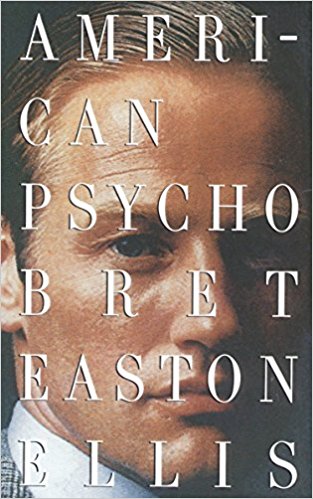
Kageoween: American Psycho Book Review

INTRODUCTION
     American Psycho is perhaps more known for being controversial as opposed to being classic. When it was first released back in 1991, it stirred quite the riot over it. Some places banned it, others wanted it to be censored, those mentioned within its pages wanted to be dissociated with it. A decade after its release, it was turned into a movie and has pretty much been forgotten about since, after than a few articles on its 25th anniversary.

STORY
     The story takes place sometime in the 1980’s, although when, I’m not sure. So many clues allude to 1988 or 1989, but his reference to new things, skew the timeframe, especially because our narrator is obsessed with going with the crowd, material possession and what is the “in” thing is. He’s successful, or so he claims and he moonlights as a psychotic killer. Very interesting narrator indeed. If I were to sum this up, it would be Seinfeld meets Psycho in reverse. You see, our narrator is unreliable, much like Humbert in Lolita. You get 100 or so pages in and he describes killing a homeless man, which is so over the top, you wouldn’t even need to read a rudimentary criminality book to know he is full of shit and his bullshitting doesn’t let up from there, until the end, of a lying, banal, but witty, narcissistic, vain and dull shell of a person. Bateman is just going through the motions and you can get an understanding of why and I can completely why the author has expressed it as how he felt during the decade. There is nothing of substance in this book, not even the prose, but it still does so much with so little.

THEMES
     By now, most people know it is a satire, a critique on the 1980’s and its culture of material wealth, meaningless existence and just dialing it in.

     If you’re aware enough, you’ll pick up on all the clues around you, that people are self-absorbed, narcissistic, blow-hards with little to no substance. If anything, now with the addition to Millennials, into the world and this is more poignant that ever and could still describe our world today, even if it is a bit dated.

     The worst part of this book, is that Patrick is actually a “normal” human, who isn’t actually insane, albeit, slightly OCD, which causes his weird thoughts and obsessions. Add in the fact he is an MBTI Guardian type and that fills in quite a bit of his personality code as to why he is the way he is. One could argue that the stress Batemen is going through is causing his auxiliary to kick in, giving him the odd and inferior intuitive aspects he exhibits.

     If this character was written today, there is no doubt that he would be an Incel type, bitching online and expressing himself as vulgarly as he can and probably be leading a cult, resulting in his untimely death.

CONCLUSION
     This book is still relevant, the movie does a piss poor job at recreating what is so good about this book. The beats are all still funny, the prose is a character in and of itself and if you get it, you’ll love this book as I have.

5 stars out of 5

Kageoween: Frankenstein Book Review

INTRODUCTION

     Frankenstein, for all the pop culture surrounding it, isn’t a horror novel. Not in the traditional sense anyways. I see that as a shallow view of the book and a literal interpretation. Much has been said over the years about it dealing with fear of technology, science and modern advancement and given the history of the era, one cannot be faulted for thinking such, especially because Christianity still had a massive foothold. What about the book in 2018 though? If anything, Frankenstein is about the horror of humanity and its decrepit ugliness towards anything that is left of center or queer and the plight of humanity vs growth.

     The book follows multiple narratives and interweaves an intriguing story that really only drags in the middle. The rest of the book advances at a great pace and tells the story with prose that is stylistic, as opposed to seeming outdated. It’s quite easy to understand, although the narrative switch for me, wasn’t exactly clear at one point. Despite all that, the book and its central themes are fantastic with very little to complain about.

CHARACTERS
     The book has three main point of views, Victor Frankenstein as told through a primary narrator named Robert Wolton, the monster itself and various others through letters. Legend has it that the book was created as the result of a party were all guest agreed to write a horror story and this is the result of such. Marry Shelly was alleged to have struggled with coming up with an idea, which the multiple point of views tend to allude to.

     Victor Frankenstein has the most development of all the characters with the monster coming in second place. Everyone else, even when they seem important to the plot, are kind of just there. Not like background characters, but given the fact they have names and we’re exposed to some of their history through exposition, one would think they would have been important enough to warrant more development then they had.

STYLE AND PLOT
     Having been written 200 years ago, the prose hold up, very well. It’s similar to the modern novel in a lot of ways by exhibiting concise, basic prose, but still with evocative imagery, so that allows anyone to follow along with the story. Very accessible to the average reader with enough depth to satisfy anyone who demands more from their lit.

     The overall plot, if you can call it that, is as follows: Dr.Frankenstein created a being from unknown science, his monster took on a mind of his own. The monster taught himself to read, speak and learn. Unable to live in society, he is basically exiled and doomed to a life of loneliness, when returns to ask the good doctor to make another in his image and is refused, turning the monster to enact revenge upon him, which results in the death of both.

THEMES
     Besides writing, the themes is where the story is truly at. One could cull so many different interpretations from this work. It could be seen as the story of Lucifer, cast from heaven, making the renegade angel of enlightenment a lot more sympathetic. Given the time frame though, I doubt Mary Shelly or anyone would of consider admitting to such. One can view this as being a woman in the time frame, constantly turned away from manly endeavors that they’re just not built for, which is why this book was originally published anonymously, I’m sure and only bore her name years later.

     Other interpretations could be relating to being a monster or outcast as a teenager or in our modern area, being an Incel, since the monster is very much Incel like in demeanor with similar demands for a wife.

     Still, none of these seem like very good interpretations, but a few are dated. My own personal interpretation is the monster is representative of intellectualism, which is why the monster’s story is similar to Lucifer in the bible. There is innumerable evidence to back this up, including, but not limited to: The monster rebelling against his creator, the love for learning, being cast out and most importantly being misunderstood by the more emotional humans that plague the lands of this tale. Frankenstein is doing his best to live in a world that values emotion over logic and intelligence and is doing a poor job at such. No matter what, he is constantly exiled and seen as a monstrosity.

     When a young woman is executed for murder of a young child, the monster is undoubtedly to blame. This is fantastic use of metaphor, since the monster is intellect and the child is innocents and people fear that knowledge would lead to a loss of that innocence. So not only are the townspeople enraged, but they are also hasty to point the finger and hang an innocent woman.

     Almost every negative thing in this book is a direct cause of others letting their emotion rule them as opposed to being in control of themselves. They project their worst habits on the monster, enough though the monster is never really described. It leaves one to see the monster as the hero instead of everyone around him, who are all too willing kill, point the finger, flip out or destroy someone without due cause. It is the intriguing concept of humanity in all forms that really drives the narrative and makes it an enjoyable read.

CONCLUSION
     Frankenstein isn’t horror and the idea it is, 200 years on, is ashame. It’s called the original science fiction novel and while it has those tropes, I wouldn’t call it that either, since Sci-fi is often denoted by its obsession with technology. In a lot of ways, it is a gothic weird tale, but even that doesn’t really do the story justice in terms of describing it. The only way to really describe it, would be to call it what it is, that is character driven lit and our attitudes, prejudices and intolerance to difference in this world, no matter the era that keep this book being reprinted over and over again, to be enjoy and inspire future generations.
Five out of Five Stars

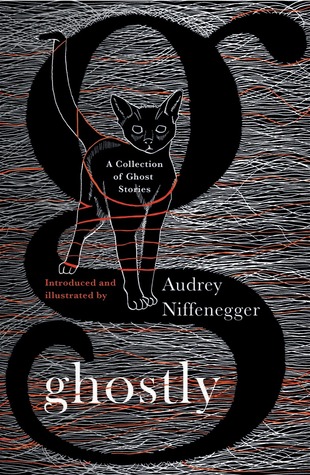
Ghostly: Book Review

     This is going to be one of my shortest reviews. Ghostly, the anthology is a collection of older writers and modern writers. Most the stories are excellent, but Audrey’s is where i’m perplexed by its consideration for inclusion.

     You may know her from the movie based on her book The Time Traveler’s Wife as opposed to horror, although, she has a few credits in that genre.

     The books central theme is ghost. Although the cover would make you think it was cats, especially since her story and Edgar Allen Poe’s The Black Cat are both printed in this. The art on the cover is beautiful and the book is bound with sturdy binding. The text and pages are bright and easy to read.

     Each story has a introduction blurb to the story you’re about to read and all stories are a great inclusion into this set.

     The problem I’m trying to figure out, as stated above, is the reason for the inclusion of her story. Out of all the stories, this one is by far the most amateurish of them all. It lacks suspense, character, story and most of all, everything is told, as opposed to show. This wouldn’t be a bad thing if this collection was like Scary Stories to Tell in the Dark but it isn’t. It seems like the only reason to bother with this anthology was to publish this one story of hers. I cannot see any other reason she needed to put this together. I would presume that she had a lot of emotion invested into that story and as such, she wanted it published somehow and this was the only way to get it to the reader, editor be damned!

     Interestingly enough, the story still works, albeit, with extremely poor prose and structure, but I can only imagine how much more powerful the climax might of been had she attempted to build up suspense, instead of this awkward telling which ultimately leads to a let down and cliched ending.

     Had this just been an anthology with works that influenced her style that had introductions and maybe even scholarly notes about each individual work, it would of been a fantastic book. As it stands, it just an unnecessary collection using work of other authors to push her own into the spotlight and that is one of the saddest take away besides the list of notable authors who go second billing to herself.

     I give the collection 3 out of 5 stars.You won’t be saddened for having spent your money, since almost every story is excellent, but you’ll scratch your head as to why this book even needed to be made in the first place.